
Dental Implants in Adelaide CBD
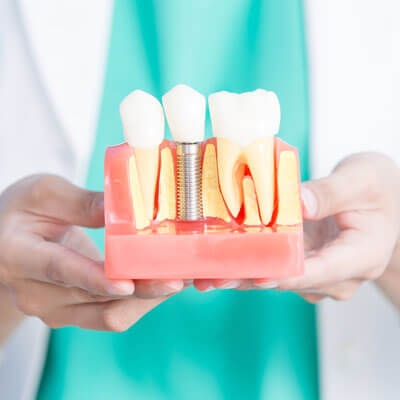 A dental implant is an artificial root placed into the jawbone to support a crown, bridge, or full denture. Made from biocompatible titanium, it integrates with the bone to provide a stable foundation for replacement teeth and may reduce the need for removable appliances.
Implants have been used in dentistry for many years and are a widely used option for replacing missing teeth. They are designed to restore the appearance and function of your smile while supporting long-term oral health. While implant care may involve a greater upfront investment than some alternatives, many patients choose this option for its durability and stability.
Implant Placement
Implant dentistry is typically completed in two stages.
- Phase 1: The implant is placed into the jawbone using precise surgical techniques. The gum is gently opened, the bone is prepared, and the implant is positioned before the area is closed to begin healing. This phase may take between two and six months as the implant integrates with the bone.
- Phase 2: Once healing is complete, an abutment is attached to the implant and a custom crown is placed on top. Implants can be used to replace a single tooth, several teeth, or support a full denture.
Single Implants
A single implant may be placed when one tooth is missing or has been removed. The implant acts as a replacement root. After healing, an abutment and custom crown are fitted to restore function and appearance.
Multiple Implants
Multiple implants can be used to replace several missing teeth. Each implant supports a custom crown, helping to restore chewing ability and overall balance in the mouth.
Full Arch Implants
Full arch implants can support a complete set of teeth. In many cases, a small number of implants are used to stabilise a full arch prosthesis, offering a more secure alternative to traditional removable dentures.
Implants, Bridges, and Dentures: Understanding Your Options
Not every patient is suited to dental implants, and it’s important to understand how each option compares.
Dental implants are a long-term option that integrates with the jawbone and supports natural function. They do not rely on neighbouring teeth for support.
Dental bridges may be suitable when adjacent teeth already require crowns or when implant placement is not appropriate. A bridge uses surrounding teeth for support and typically requires reshaping them.
Dentures are a removable option often used when multiple teeth are missing. They can restore appearance and function, although they do not provide the same level of stability as fixed options.
During your consultation, we will assess your oral health, bone structure, and goals to help you choose an option that suits your needs.
Are You a Candidate for Dental Implants?
Implants may be suitable for many patients, but a thorough assessment is required.
You may be a candidate if you have one or more missing teeth, adequate jawbone support, healthy gums, and good general health. In some cases, additional procedures such as bone grafting may be considered.
Implants may not be recommended if gum disease is present and unmanaged, if certain medical conditions affect healing, or if you smoke heavily. Smoking is an important factor that can affect healing and outcomes. Implants are also not typically placed in younger patients whose jawbones are still developing.
A consultation is the best way to determine whether implants are appropriate for you.
After Your Implant: What to Expect
The healing phase plays an important role in the overall process.
In the first few days, some swelling, bruising, and discomfort may occur. This is usually manageable with standard pain relief and by following aftercare instructions. Soft foods are recommended during this time, and avoiding smoking and alcohol can support healing.
Over the following weeks and months, the implant integrates with the surrounding bone. This process helps create a stable foundation for the final restoration. Follow-up visits allow us to monitor healing and address any concerns.
Once healing is complete, your final crown, bridge, or prosthesis is fitted and adjusted. Ongoing care includes daily brushing and flossing, along with regular dental check-ups. Long-term outcomes vary depending on oral hygiene, general health, and lifestyle factors.

Frequently Asked Questions
How much do dental implants cost?
Can I get a quote without an appointment?
What information helps with an estimate?
How long do dental implants last?
Book an Appointment Today!
Find out whether dental implants are right for you. Contact Smiles On Grenfell to schedule a consultation. We will guide you through your options, explain what to expect, and help you make an informed decision.
* Any invasive or surgical procedure may carry risks. Before moving forward, it is recommended that you seek a second opinion from an appropriately licensed medical professional.
